How to Turn a Photo Into a Different Decade With AI
Create a convincing 1950s, 1980s, 1990s, or early-2000s portrait while keeping the person recognizable and making the whole photograph feel period-specific.
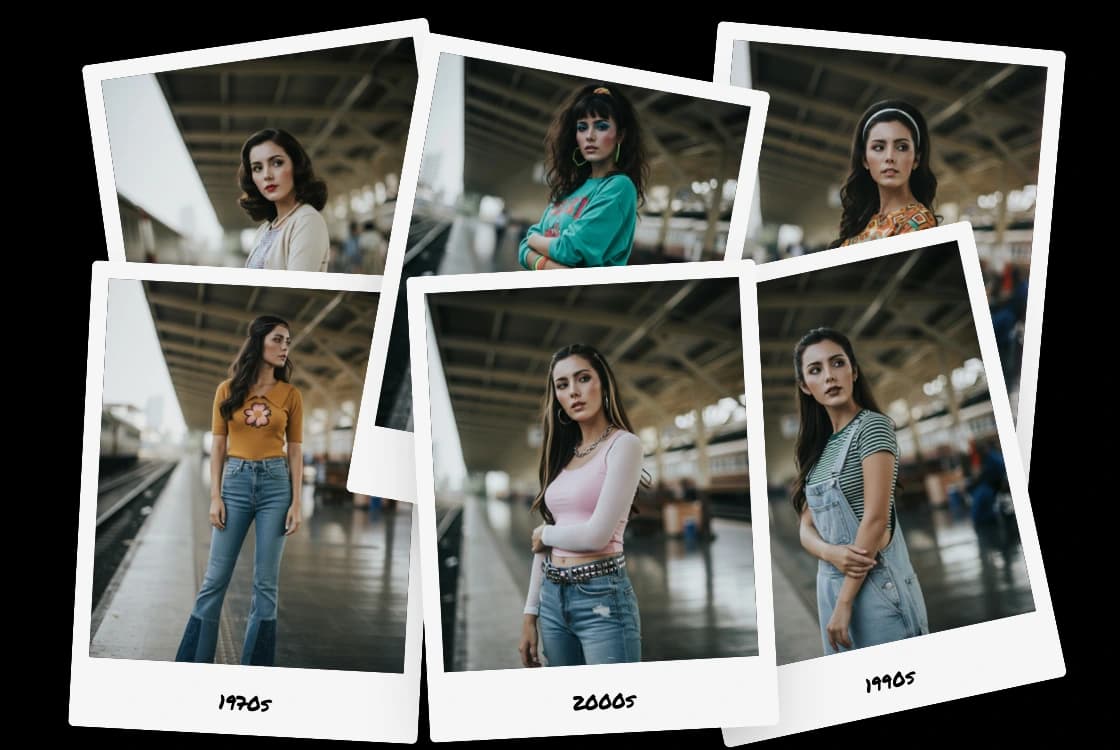
A convincing decade transformation changes more than the outfit.
Hair, makeup, location, furniture, cars, signage, print color, film grain, flash behavior, and the camera itself all contribute to whether an image feels like the 1950s or merely looks like a modern costume party.
Use the Retro Film Portrait template for a direct era transformation. Use Meet Your Younger Self when you want two periods of the same person to appear together.
The quick workflow
- Upload a clear portrait with the face unobstructed.
- Choose one decade instead of mixing several eras.
- Lock the person's identity, expression, and recognizable features.
- Describe clothing, grooming, location, and photographic process separately.
- Inspect the face, hands, background objects, and accidental modern details.
Choose a useful source portrait
Start with an image that gives the model enough identity information to preserve.
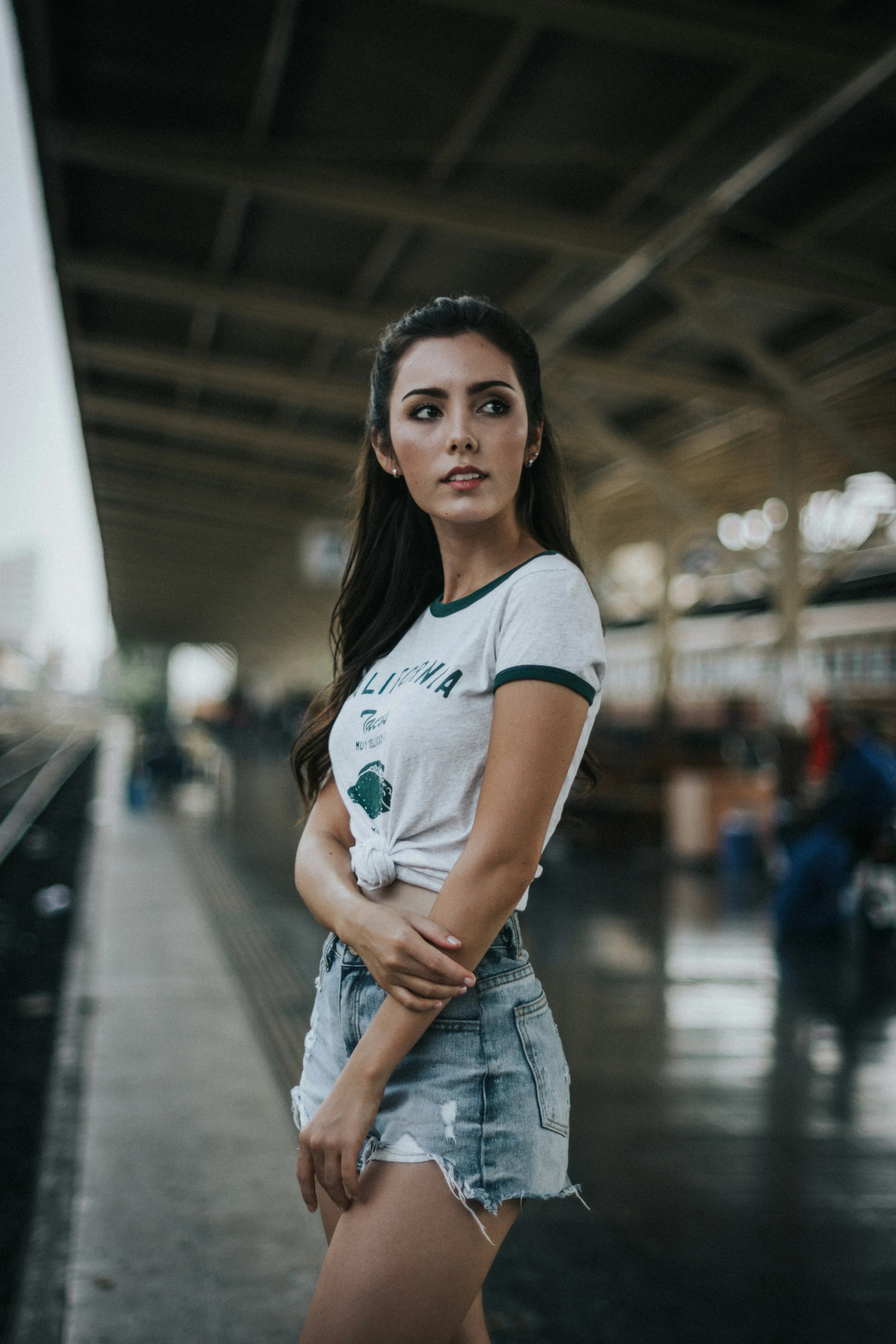
The strongest input usually has:
- One clearly visible person.
- Natural facial detail without a heavy beauty filter.
- A relaxed pose with visible shoulders or full body.
- Even lighting across the face.
- No sunglasses, hands, hair, or props covering key features.
- Enough space for a new environment or period clothing.
A tight selfie can work for a headshot, but it gives the model less freedom to create a convincing full period scene.
Build the decade from four layers
Treat the prompt as four connected decisions.
| Layer | Questions to answer |
|---|---|
| Identity | What must remain recognizable? |
| Wardrobe and grooming | What clothing, hair, and makeup belong to the era? |
| Environment | What location and objects support the period? |
| Image process | What lens, film, flash, grain, and color response make it feel photographed then? |
If you describe only the decade, the result may rely on a few stereotypes. Specific visual evidence makes the transformation more believable.
Example: a 1950s street portrait
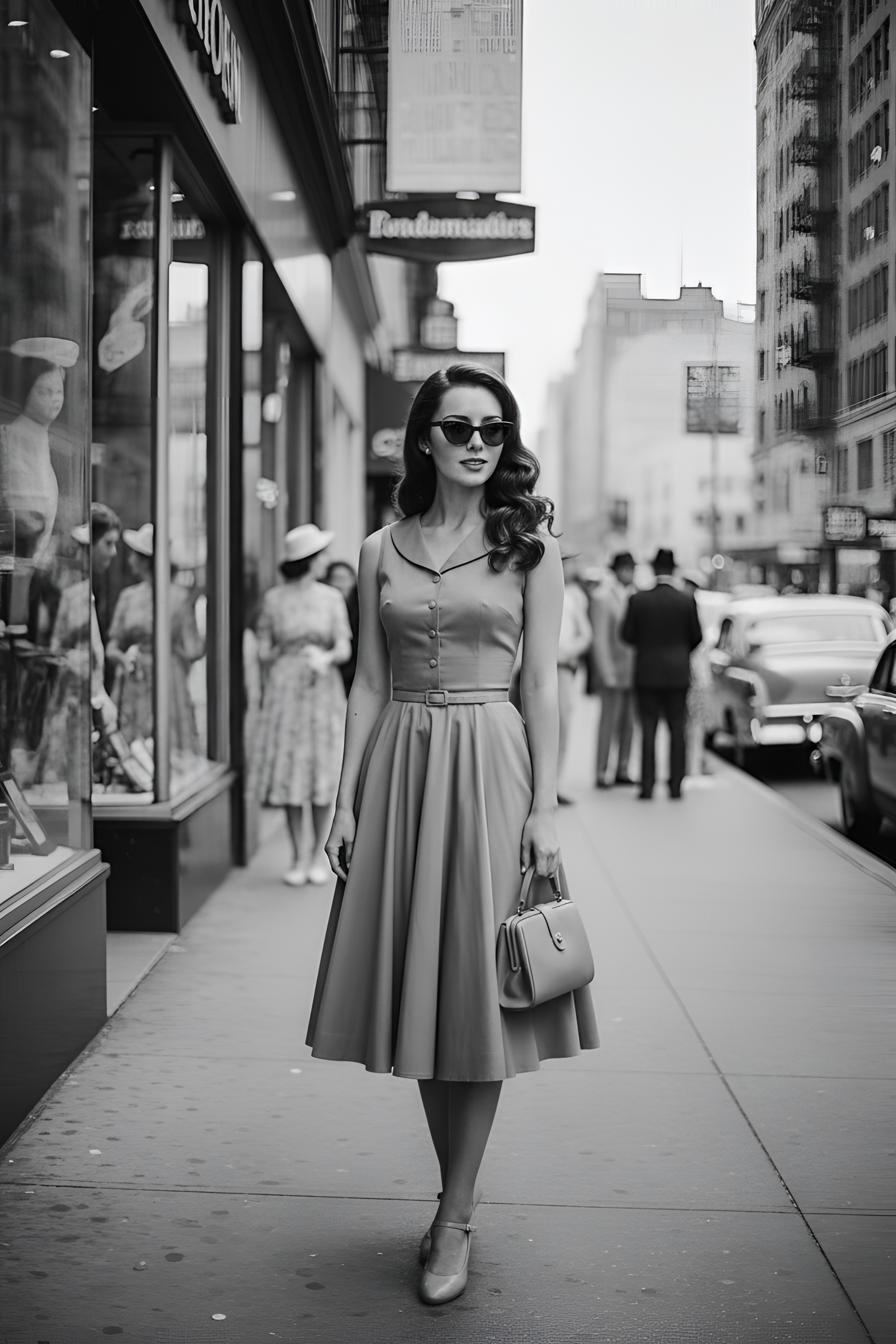
Transform this portrait into an elegant 1950s city street photograph.

Keep the same person recognizable. Preserve her facial structure, eyes, nose, mouth, and calm expression.

Wardrobe and grooming: fitted tea-length day dress, narrow belt, structured handbag, softly waved hair, understated period makeup, cat-eye sunglasses.

Environment: busy mid-century shopping street with period storefronts, pedestrians, and parked 1950s cars. No modern objects.

Image process: black-and-white editorial photography, natural midday light, crisp subject, fine film grain, moderate contrast, authentic lens softness toward the edges.
The useful details are not simply “vintage.” The prompt names a silhouette, accessories, street context, vehicles, and monochrome photographic treatment.
Example: an energetic 1980s portrait
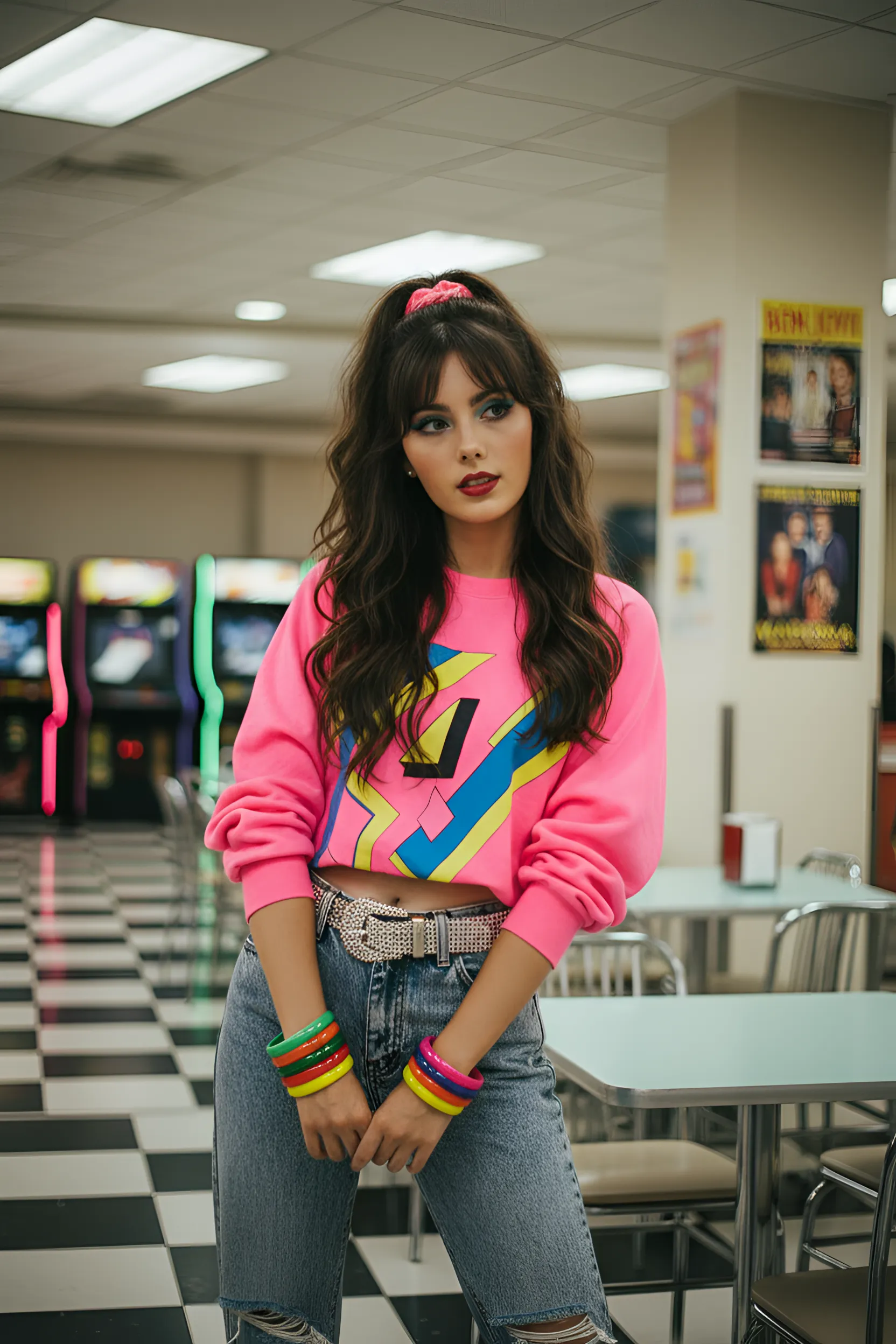
Recreate this person in a cheerful late-1980s portrait.

Keep her face and identity recognizable. Change the wardrobe, hair, makeup, setting, and photographic treatment only.

Wardrobe and grooming: bright geometric sweatshirt, high-waisted acid-wash jeans, colorful bangles, voluminous half-up hair with a fabric scrunchie, bold but believable blue-green eye makeup.

Environment: family arcade and diner with period machines, tiled floor, fluorescent ceiling light, and no modern screens or branding.

Image process: consumer color-film photograph, direct on-camera flash balanced with fluorescent ambient light, gentle grain, slightly warm skin tones.
Example: a restrained 1990s night portrait
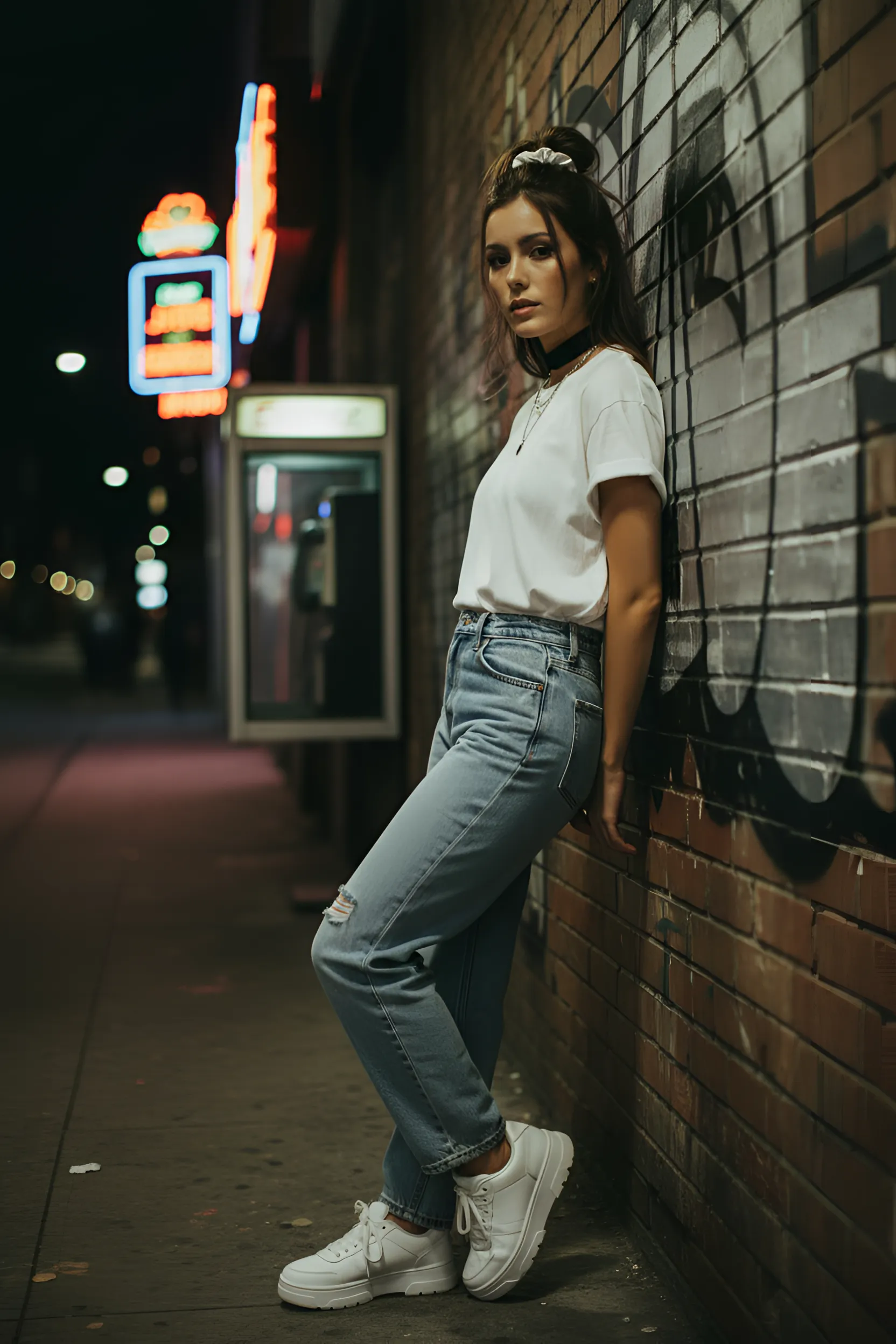
Transform this portrait into a grounded mid-1990s nighttime street photograph.

Preserve the same person's facial identity and natural proportions.

Wardrobe and grooming: plain oversized white T-shirt, relaxed high-waisted jeans, simple sneakers, thin necklace, minimal makeup, casual half-up hair with a neutral scrunchie.

Environment: tiled city wall near a small neon-lit storefront, ordinary pavement, no smartphones, LED signs, modern cars, or contemporary logos.

Image process: available-light 35mm color film, muted colors, visible grain, soft neon halation, deep shadows without glossy cinematic grading.Preserve identity without freezing the photograph
Identity preservation does not mean keeping every pixel unchanged. The hairstyle, clothing, lighting, and location need permission to move.
Use a clear boundary:
Preserve facial identity, age, skin tone, body proportions, and expression.
Change clothing, hairstyle, makeup, environment, lighting, and photographic process to match the selected decade.
If the result looks like a different person, reduce the number of simultaneous changes or use a higher-fidelity model with the source as the only identity reference.
Common mistakes
The result looks like modern fashion with a filter
Describe garment construction, silhouette, grooming, location, and photographic process. A color grade alone does not create a decade.
Several decades are mixed together
Avoid broad instructions such as “retro from the 80s or 90s.” Choose one period and use compatible details.
The photograph looks too perfect
Modern AI images often have immaculate skin, dramatic cinema lighting, and excessive background blur. Ask for consumer film, ordinary ambient light, restrained retouching, and era-appropriate imperfections.
The background contains modern objects
Name the most likely intrusions in the avoid line: smartphones, modern screens, LED fixtures, current vehicles, and contemporary signage.
The recommendation
Choose one decade and build it through identity, wardrobe, environment, and image process.
The strongest retro portrait is not the one with the loudest costume. It is the one where every visible detail seems to have been photographed in the same year.
Sources and image credits
The source and transformed portraits use fictional subjects and were created as Nenis workflow examples. Historical styles are creative interpretations rather than documentary reconstructions. When depicting a specific culture, uniform, event, or real historical person, verify period details with appropriate historical sources.